

When it comes to pipes used in various industries, two common types often come under consideration: seamless pipes and SSAW (Spiral Submerged Arc Welded) pipes. As a supplier of seamless pipes, I've had numerous conversations with clients trying to understand the differences between these two options. In this blog, I'll delve into the key distinctions between seamless pipes and SSAW pipes, which can help you make an informed decision for your specific needs.
Manufacturing Process
The most fundamental difference between seamless pipes and SSAW pipes lies in their manufacturing processes.
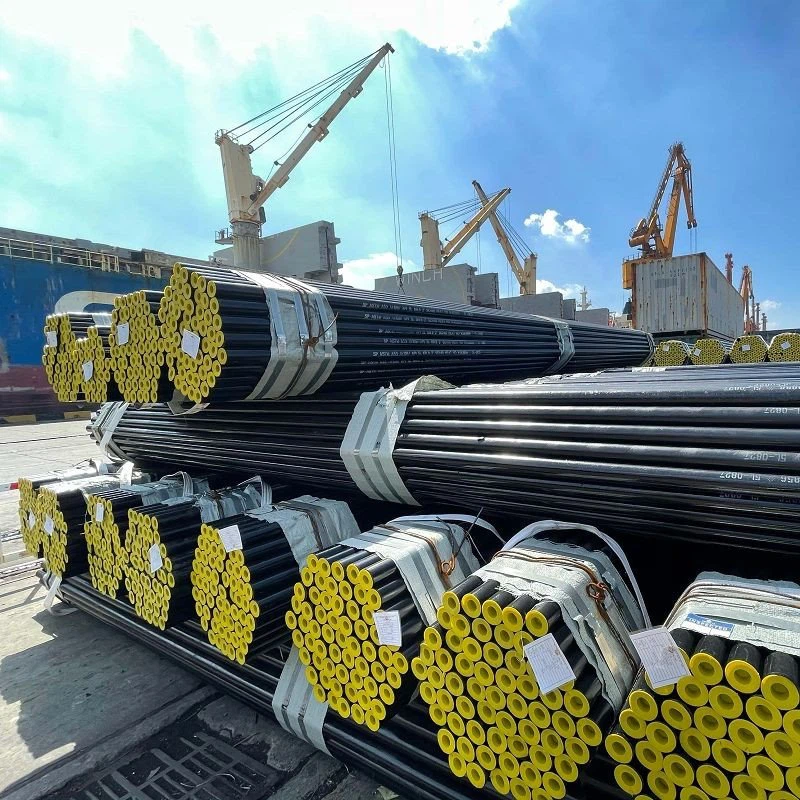

Seamless Pipe Manufacturing
Seamless pipes are produced without any welding seams. The process typically starts with a solid cylindrical steel billet. This billet is heated to a high temperature until it becomes malleable. Then, a piercing rod is pushed through the center of the billet to create a hollow tube. After that, the tube undergoes a series of rolling and sizing processes to achieve the desired diameter and wall thickness. This continuous and homogenous manufacturing process results in a pipe with uniform structure and excellent mechanical properties. For example, our Seamless Carbon Steel Pipe Sch 40 is manufactured using this advanced seamless process, ensuring high - quality and reliable performance.
SSAW Pipe Manufacturing
SSAW pipes, on the other hand, are made from steel coils. The steel coil is first uncoiled and then formed into a spiral shape. The edges of the spiral are then welded together using the submerged arc welding method. In this process, an electric arc is created between the electrode and the workpiece under a layer of granular flux. The flux protects the weld from oxidation and contamination, resulting in a strong weld joint. However, the presence of the weld seam is a characteristic feature that differentiates SSAW pipes from seamless pipes.
Structural Integrity
The manufacturing process has a significant impact on the structural integrity of the pipes.
Seamless Pipes
Seamless pipes have a uniform and continuous grain structure throughout the pipe. This lack of a weld seam means there are no weak points in the pipe due to welding. As a result, seamless pipes can withstand high internal pressures and are less likely to develop leaks or failures under extreme conditions. They are particularly suitable for applications where reliability and safety are of utmost importance, such as in the oil and gas industry for transporting high - pressure fluids.
SSAW Pipes
While SSAW pipes have a strong weld seam, the weld area can sometimes be a potential weak point. The welding process can introduce residual stresses and micro - structural changes in the weld zone. Under certain conditions, such as high - pressure fluctuations or corrosive environments, these areas may be more prone to failure compared to seamless pipes. However, proper welding techniques and quality control measures can minimize these risks, and SSAW pipes are still widely used in many applications where the pressure requirements are not extremely high.
Dimensional Accuracy
Dimensional accuracy is another important factor to consider when choosing between seamless and SSAW pipes.
Seamless Pipes
Seamless pipes generally offer higher dimensional accuracy. The rolling and sizing processes used in their manufacturing can precisely control the outer diameter, wall thickness, and length of the pipes. This makes them ideal for applications where tight tolerances are required, such as in precision machinery or high - tech equipment. For instance, in the automotive industry, seamless pipes are often used for hydraulic systems where accurate dimensions are crucial for proper functioning.
SSAW Pipes
SSAW pipes may have slightly lower dimensional accuracy compared to seamless pipes. The spiral forming process and the welding operation can introduce some variations in the pipe's dimensions. However, modern manufacturing techniques and advanced quality control systems have significantly improved the dimensional accuracy of SSAW pipes, and they can still meet the requirements of many general - purpose applications.
Surface Finish
The surface finish of the pipes can also vary between seamless and SSAW pipes.
Seamless Pipes
Seamless pipes usually have a smooth and uniform surface finish. The absence of a weld seam eliminates the need for post - welding surface treatment, resulting in a clean and consistent surface. This smooth surface is beneficial in applications where fluid flow is a concern, as it reduces friction and pressure drop. It also makes seamless pipes more resistant to corrosion, as there are no rough areas or crevices where corrosive agents can accumulate.
SSAW Pipes
SSAW pipes may have a slightly rougher surface finish due to the presence of the weld seam. The weld area may require additional surface treatment, such as grinding or coating, to achieve a smooth surface. However, with proper finishing processes, SSAW pipes can also have an acceptable surface finish for most applications.
Cost
Cost is often a deciding factor in the selection of pipes.
Seamless Pipes
Seamless pipes are generally more expensive than SSAW pipes. The manufacturing process of seamless pipes is more complex and requires specialized equipment and skilled labor. The higher cost is also due to the superior quality and performance characteristics of seamless pipes. However, in applications where the benefits of seamless pipes, such as high - pressure resistance and reliability, are essential, the additional cost may be justified.
SSAW Pipes
SSAW pipes are more cost - effective, especially for large - diameter pipes. The use of steel coils and the relatively simpler manufacturing process result in lower production costs. This makes SSAW pipes a popular choice for applications where cost is a major consideration and the pressure and performance requirements are not extremely demanding, such as in water supply and drainage systems.
Applications
The differences in the properties of seamless and SSAW pipes make them suitable for different applications.
Seamless Pipes
- Oil and Gas Industry: Seamless pipes are widely used in the oil and gas exploration, production, and transportation sectors. They are used for well - casing, tubing, and pipelines to withstand high - pressure and corrosive environments.
- Power Generation: In power plants, seamless pipes are used for steam lines, boiler tubes, and other high - temperature and high - pressure applications.
- Automotive and Aerospace: Seamless pipes are used in the manufacturing of automotive components, such as hydraulic cylinders and fuel injection systems, as well as in aerospace applications where lightweight and high - strength materials are required.
SSAW Pipes
- Water and Wastewater Systems: SSAW pipes are commonly used for water supply and drainage systems due to their large - diameter capabilities and cost - effectiveness.
- Structural Applications: They are also used in structural applications, such as in the construction of bridges and buildings, where they can provide support and stability.
- Piling Works: SSAW pipes are suitable for piling works, as they can be driven into the ground to provide foundation support.
Conclusion
In summary, seamless pipes and SSAW pipes have distinct differences in terms of manufacturing process, structural integrity, dimensional accuracy, surface finish, cost, and applications. As a seamless pipe supplier, I understand the unique advantages that seamless pipes offer, such as their high - pressure resistance, uniform structure, and smooth surface finish. However, SSAW pipes also have their own merits, especially in terms of cost - effectiveness and large - diameter capabilities.
When choosing between seamless and SSAW pipes, it's important to consider your specific requirements, including the pressure, temperature, corrosion resistance, and budget. If you need high - quality pipes for critical applications, seamless pipes may be the better choice. On the other hand, if cost is a major concern and the performance requirements are less demanding, SSAW pipes could be a suitable option.
If you're interested in learning more about seamless pipes or have specific pipe requirements for your project, I encourage you to reach out to me. I'll be happy to assist you in selecting the right pipes and providing you with the best solutions for your needs.
References
- ASME Boiler and Pressure Vessel Code
- API (American Petroleum Institute) Standards
- ASTM (American Society for Testing and Materials) Standards