

Cold-rolled (CR) coils are widely used in various industries due to their smooth surface finish, high dimensional accuracy, and excellent mechanical properties. However, the raw CR coils are susceptible to corrosion and may not meet the specific requirements of different applications. Therefore, surface treatment methods are essential to enhance the performance and durability of CR coils. As a reliable CR coil supplier, we offer a range of surface treatment options to meet the diverse needs of our customers. In this blog, we will explore some common surface treatment methods for CR coils.
1. Hot Dipped Galvanized Coating
Hot dipped galvanizing is a popular surface treatment method for CR coils. In this process, the CR coils are immersed in a bath of molten zinc at a temperature of around 450°C. The zinc reacts with the iron in the steel to form a series of zinc-iron alloy layers, followed by a pure zinc layer on the surface. This creates a protective barrier that prevents the underlying steel from coming into contact with oxygen and moisture, thus significantly improving the corrosion resistance of the CR coils.
The hot dipped galvanized coating provides excellent durability and long-term protection, making it suitable for outdoor applications such as construction, automotive, and electrical industries. The zinc coating also has a self-healing property, which means that if the coating is scratched or damaged, the zinc will sacrificially corrode to protect the steel substrate.

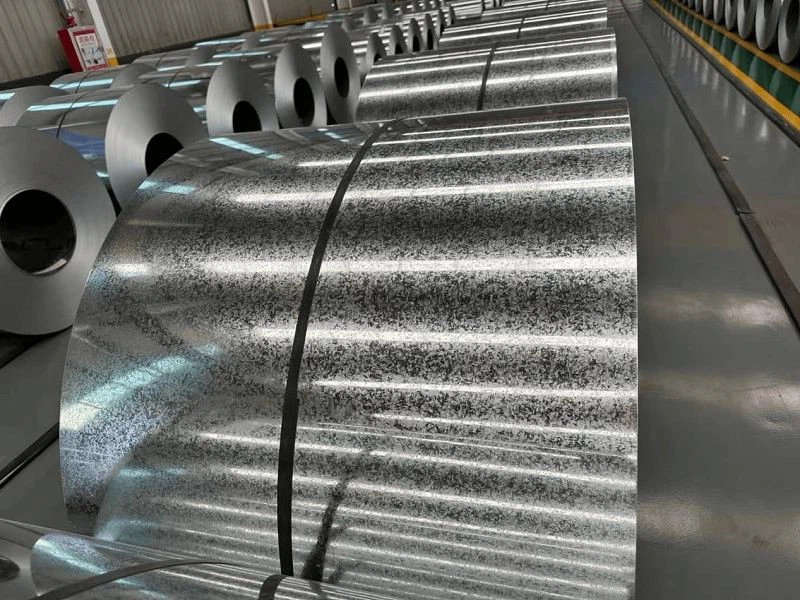
For more information about our Hot Dipped Galvanized Coil, please feel free to contact us.
2. Electro Galvanized Coating
Electro galvanizing is another common surface treatment method for CR coils. Unlike hot dipped galvanizing, electro galvanizing uses an electrolytic process to deposit a thin layer of zinc onto the surface of the CR coils. In this process, the CR coils are placed in an electrolyte solution containing zinc ions, and an electric current is passed through the solution. The zinc ions are then reduced and deposited onto the surface of the CR coils.
Electro galvanized coatings typically have a more uniform and smoother appearance compared to hot dipped galvanized coatings. They also offer good corrosion resistance, although the thickness of the zinc coating is generally thinner than that of hot dipped galvanized coatings. Electro galvanized CR coils are commonly used in applications where a high-quality surface finish is required, such as in the manufacturing of household appliances, furniture, and electronic components.
If you are interested in our Electro Galvanized Coil, please get in touch with us.
3. Phosphating
Phosphating is a chemical conversion coating process that involves treating the CR coils with a phosphate solution. The phosphate solution reacts with the iron in the steel to form a layer of iron phosphate on the surface. This phosphate layer provides several benefits, including improved adhesion for subsequent coatings, enhanced corrosion resistance, and reduced friction.
Phosphating is often used as a pre-treatment step before painting or powder coating. The phosphate layer helps to improve the adhesion of the paint or powder coating to the surface of the CR coils, ensuring a more durable and long-lasting finish. Phosphated CR coils are commonly used in the automotive, machinery, and metalworking industries.
4. Chromating
Chromating is a surface treatment process that involves applying a chromate conversion coating to the CR coils. The chromate coating contains chromium compounds, which provide excellent corrosion resistance and improve the paint adhesion. Chromating can be done in different forms, such as hexavalent chromium chromating and trivalent chromium chromating.
Hexavalent chromium chromating has been widely used in the past due to its excellent corrosion protection properties. However, due to the environmental and health concerns associated with hexavalent chromium, many industries are now shifting towards trivalent chromium chromating, which is considered to be a more environmentally friendly alternative. Chromated CR coils are commonly used in applications where high corrosion resistance and good paint adhesion are required, such as in the aerospace and marine industries.
5. Colour Coated Treatment
Colour coated treatment involves applying a layer of paint or powder coating to the surface of the CR coils. This not only provides a decorative finish but also enhances the corrosion resistance and durability of the coils. The colour coated CR coils are available in a wide range of colors and finishes, allowing customers to choose the one that best suits their aesthetic and functional requirements.
The colour coated process typically involves several steps, including pre-treatment, primer application, topcoat application, and curing. The pre-treatment step is crucial to ensure good adhesion of the paint or powder coating to the surface of the CR coils. The primer provides additional corrosion protection and improves the adhesion of the topcoat. The topcoat is responsible for the color and appearance of the coils, as well as providing resistance to abrasion, weathering, and chemicals.
Our Colour Coated Sheet Coil is a popular choice for applications such as building facades, roofing, and interior decoration.
Factors to Consider When Choosing a Surface Treatment Method
When choosing a surface treatment method for CR coils, several factors need to be considered:
- Application Requirements: The intended application of the CR coils will determine the type of surface treatment required. For example, if the coils are to be used in an outdoor environment, a surface treatment with high corrosion resistance, such as hot dipped galvanizing or colour coated treatment, may be necessary.
- Cost: Different surface treatment methods have different costs associated with them. Hot dipped galvanizing and colour coated treatment are generally more expensive than electro galvanizing and phosphating. It is important to balance the cost with the performance requirements of the application.
- Environmental Impact: Some surface treatment methods, such as hexavalent chromium chromating, have a significant environmental impact. It is important to choose a surface treatment method that is environmentally friendly and complies with relevant regulations.
- Aesthetic Requirements: If the appearance of the CR coils is important, a surface treatment method that provides a high-quality finish, such as electro galvanizing or colour coated treatment, may be preferred.
Conclusion
Surface treatment methods play a crucial role in enhancing the performance and durability of CR coils. As a leading CR coil supplier, we offer a wide range of surface treatment options to meet the diverse needs of our customers. Whether you need hot dipped galvanized coils for outdoor applications, electro galvanized coils for high-quality surface finishes, or colour coated coils for decorative purposes, we have the solution for you.
If you are interested in our CR coils or have any questions about surface treatment methods, please do not hesitate to contact us. Our team of experts is ready to assist you in choosing the right surface treatment method for your specific requirements and to provide you with high-quality products and excellent customer service.
References
- ASM Handbook, Volume 5: Surface Engineering. ASM International.
- Corrosion Basics: An Introduction. National Association of Corrosion Engineers (NACE).
- Steel Construction Manual. American Institute of Steel Construction (AISC).