

As a seasoned H beam supplier, I'm often asked about the manufacturing processes behind these versatile structural components. H beams, also known as I beams or universal beams, are widely used in construction, engineering, and various industrial applications due to their excellent strength-to-weight ratio and load-bearing capabilities. In this blog post, I'll take you through the step-by-step journey of how H beams are manufactured, from raw materials to the finished product.
Raw Materials
The first step in the manufacturing process of H beams is the selection of high-quality raw materials. Most H beams are made from carbon steel, which is an alloy of iron and carbon with small amounts of other elements such as manganese, silicon, and sulfur. The choice of steel grade depends on the specific requirements of the application, including the required strength, ductility, and corrosion resistance.
At our company, we source our raw materials from reputable steel mills that adhere to strict quality control standards. We carefully inspect each batch of steel to ensure that it meets our specifications and is free from defects such as cracks, inclusions, or surface imperfections.
Heating and Rolling
Once the raw materials have been selected and inspected, they are heated to a high temperature in a furnace. The heating process is crucial as it makes the steel more malleable and easier to shape. The steel is typically heated to a temperature between 1,100°C and 1,300°C, depending on the steel grade and the desired properties of the finished product.
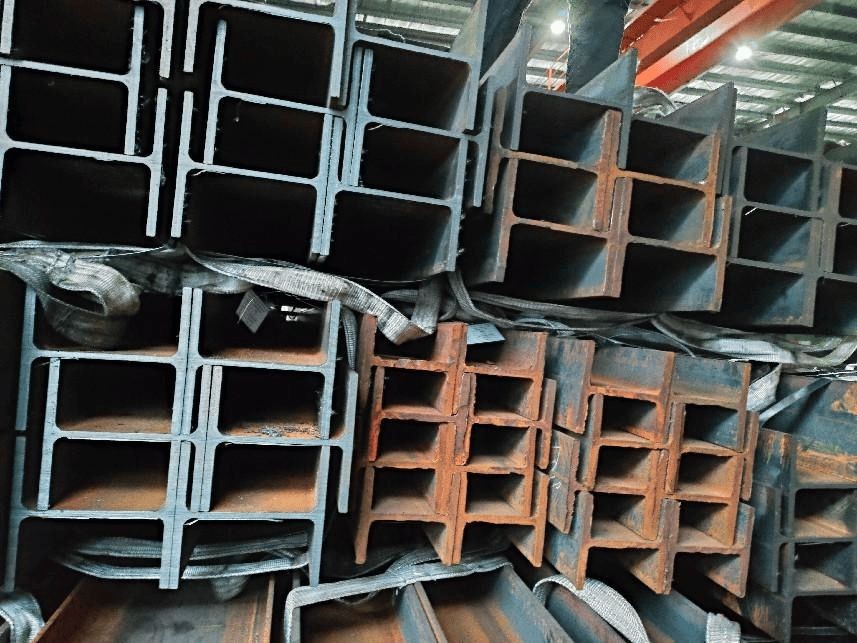
After heating, the steel is transferred to a rolling mill, where it is passed through a series of rollers to reduce its thickness and shape it into the desired profile. The rolling process is carried out in multiple passes, with each pass reducing the thickness of the steel by a small amount. The rollers are carefully designed to produce the characteristic H shape of the beam, with a wide flange at the top and bottom and a narrow web in the middle.
During the rolling process, the steel is also subjected to a high amount of pressure, which helps to improve its density and strength. The rolling mill is equipped with advanced sensors and control systems to ensure that the dimensions and properties of the H beam are within the specified tolerances.
Cutting and Finishing
Once the H beam has been rolled to the desired shape and size, it is cut to the required length using a saw or a shearing machine. The cutting process is carried out with precision to ensure that the ends of the beam are straight and square.
After cutting, the H beam is subjected to a series of finishing operations to improve its surface quality and appearance. These operations may include grinding, sandblasting, painting, or galvanizing, depending on the specific requirements of the customer. Grinding and sandblasting are used to remove any surface imperfections or scale from the beam, while painting and galvanizing are used to protect the beam from corrosion.
Quality Control
Quality control is an essential part of the manufacturing process of H beams. At our company, we have a comprehensive quality control system in place to ensure that every H beam we produce meets the highest standards of quality and performance. Our quality control team conducts a series of tests and inspections at every stage of the manufacturing process, from raw material inspection to final product testing.
Some of the tests and inspections we perform include:
- Dimensional inspection: We use precision measuring instruments to ensure that the dimensions of the H beam are within the specified tolerances.
- Chemical analysis: We analyze the chemical composition of the steel to ensure that it meets the required specifications.
- Mechanical testing: We perform a series of mechanical tests, such as tensile testing, hardness testing, and impact testing, to determine the strength and ductility of the H beam.
- Non-destructive testing: We use non-destructive testing methods, such as ultrasonic testing and magnetic particle testing, to detect any internal defects or cracks in the H beam.
Applications of H Beams
H beams are widely used in a variety of applications, including:
- Construction: H beams are commonly used in the construction of buildings, bridges, and other structures. They are used as columns, beams, and trusses to provide support and stability to the structure.
- Industrial applications: H beams are also used in a variety of industrial applications, such as manufacturing, mining, and transportation. They are used as frames, supports, and conveyors to provide strength and durability to the equipment.
- Infrastructure projects: H beams are used in infrastructure projects, such as roads, railways, and airports. They are used as piles, girders, and bridges to provide support and stability to the infrastructure.
Conclusion
In conclusion, the manufacturing process of H beams is a complex and precise process that requires advanced technology, skilled labor, and strict quality control. At our company, we are committed to producing high-quality H beams that meet the needs of our customers. We use the latest manufacturing techniques and equipment to ensure that our H beams are strong, durable, and reliable.
If you are looking for a reliable H beam supplier, look no further than our company. We offer a wide range of H beams in different sizes, grades, and finishes to meet your specific requirements. To learn more about our products and services, please visit our website at H Section Steel Beams. You can also contact us to discuss your project requirements and get a quote. We look forward to working with you!

References
- "Structural Steel Design Handbook" by William T. Segui
- "Steel Construction Manual" by American Institute of Steel Construction
- "Manufacturing Engineering and Technology" by S. Kalpakjian and S. R. Schmid