

Hey there! As a seamless pipe supplier, I often get asked about the loading capacities of seamless pipes. It's a crucial topic, especially for those in construction, manufacturing, and various industrial sectors. So, let's dive right in and explore what these loading capacities are all about.
First off, what exactly is a seamless pipe? Well, unlike welded pipes, seamless pipes are made from a solid round steel billet that is heated and then pierced through the center to create a hollow tube. This manufacturing process gives seamless pipes a uniform structure, which in turn affects their loading capacities.
One of the key factors that determine the loading capacity of a seamless pipe is its material. Seamless pipes can be made from different materials, such as carbon steel, stainless steel, and alloy steel. Each material has its own unique properties that influence how much load the pipe can handle.
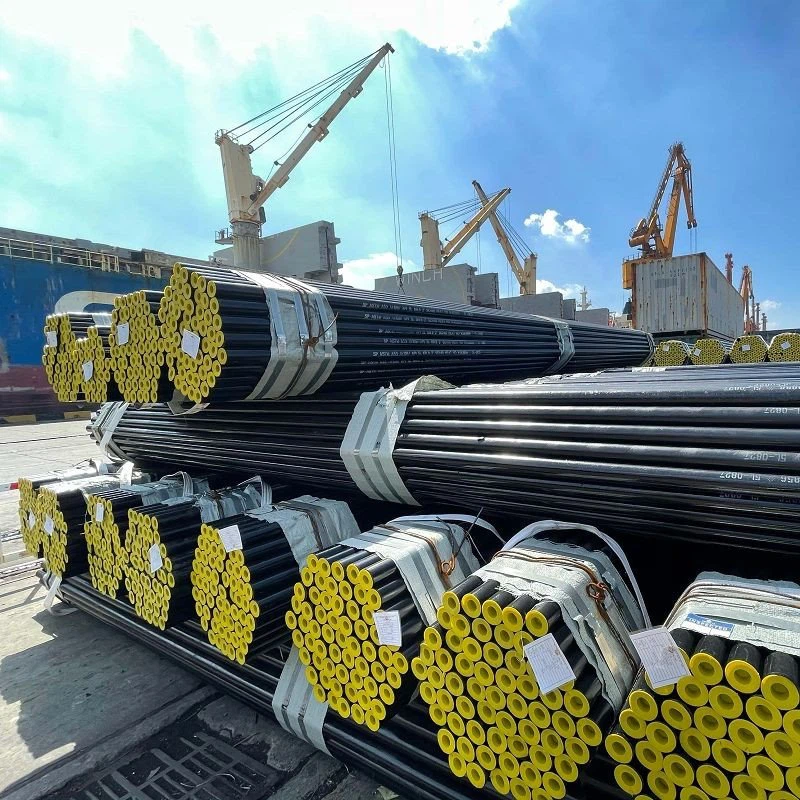
Carbon steel is one of the most commonly used materials for seamless pipes. It's strong, durable, and relatively inexpensive. Seamless Carbon Steel Pipe Sch 40 is a popular choice in many applications. The "Sch 40" refers to the schedule or wall thickness of the pipe. A thicker wall generally means a higher loading capacity. Carbon steel pipes can withstand high pressures and are often used in water and gas distribution systems, as well as in structural applications.
Stainless steel seamless pipes, on the other hand, are known for their corrosion resistance. They are often used in environments where the pipe will be exposed to moisture, chemicals, or other corrosive substances. While stainless steel pipes may not have the same high strength as carbon steel pipes, they can still handle significant loads, especially in applications where corrosion is a major concern, such as in the food and beverage industry or in marine environments.
Alloy steel seamless pipes are a combination of different metals, which gives them enhanced properties. They can have higher strength, better heat resistance, or improved corrosion resistance compared to carbon or stainless steel pipes. Alloy steel pipes are commonly used in high-temperature and high-pressure applications, such as in power plants and refineries.
Another important factor that affects the loading capacity of a seamless pipe is its diameter and wall thickness. Generally, larger diameter pipes with thicker walls can handle more load than smaller diameter pipes with thinner walls. However, it's not just about the size. The ratio of the diameter to the wall thickness also plays a role. A pipe with a larger diameter-to-wall thickness ratio may be more prone to buckling under load, while a pipe with a smaller ratio may be more rigid and able to withstand higher pressures.
The type of load also matters. Seamless pipes can be subjected to different types of loads, including internal pressure, external pressure, axial load, and bending load. Internal pressure is the pressure inside the pipe, which can be caused by the flow of fluid or gas. External pressure is the pressure outside the pipe, such as the pressure from the surrounding soil or water. Axial load is a force applied along the axis of the pipe, while bending load is a force that causes the pipe to bend.

When it comes to internal pressure, the loading capacity of a seamless pipe is determined by its burst pressure. The burst pressure is the maximum pressure that the pipe can withstand before it fails. It depends on the material, diameter, wall thickness, and other factors. To calculate the burst pressure, engineers use various formulas and standards, such as the Barlow's formula.
External pressure can also affect the loading capacity of a seamless pipe. Pipes buried underground or submerged in water may be subjected to external pressure from the surrounding soil or water. In these cases, the pipe needs to be able to withstand the external pressure without collapsing. The ability of a pipe to resist external pressure depends on its wall thickness, diameter, and the strength of the material.
Axial load is another type of load that seamless pipes may encounter. For example, in a vertical pipe system, the weight of the pipe and the fluid or gas inside it creates an axial load. The pipe needs to be able to support this load without buckling or breaking. The axial loading capacity of a pipe depends on its cross-sectional area, material strength, and the length of the pipe.
Bending load can occur when a pipe is subjected to a force that causes it to bend. This can happen in applications where the pipe is supported at multiple points or when it is used in a curved or angled configuration. The bending loading capacity of a pipe depends on its moment of inertia, which is a measure of its resistance to bending. A pipe with a larger moment of inertia can withstand more bending load.
In addition to these factors, the installation and support of the seamless pipe also affect its loading capacity. Proper installation ensures that the pipe is aligned correctly and that the joints are secure. Adequate support helps to distribute the load evenly and prevent excessive stress on the pipe.
So, how do you determine the loading capacity of a seamless pipe for your specific application? Well, it's always a good idea to consult with a professional engineer or a technical expert. They can take into account all the factors mentioned above and perform the necessary calculations to determine the appropriate pipe size, material, and wall thickness for your project.
At our company, we have a team of experienced engineers and technical experts who can help you with your seamless pipe needs. We offer a wide range of seamless pipes in different materials, sizes, and wall thicknesses. Whether you need a Seamless Carbon Steel Pipe Sch 40 for a water distribution system or a stainless steel pipe for a corrosive environment, we can provide you with the right solution.
If you're interested in learning more about our seamless pipes or have any questions about loading capacities, please don't hesitate to contact us. We're here to help you make the best choice for your project. Whether you're a contractor, a manufacturer, or an industrial user, we can work with you to meet your specific requirements.
In conclusion, the loading capacity of a seamless pipe depends on several factors, including the material, diameter, wall thickness, type of load, and installation. By understanding these factors and working with a professional, you can ensure that you choose the right seamless pipe for your application. So, if you're in the market for seamless pipes, give us a call or send us an email. We look forward to working with you!
References
- ASME Boiler and Pressure Vessel Code
- API Standards for Oil and Gas Industry
- ASTM Standards for Steel Pipes